Awards
Winners
Nominees
Sites of the Day
Sites of the Month
Inspiration
Collections
Elements
Blog
Articles
Directory
Professionals
Internationals
Freelancers
Agencies & Studios
Academy
Courses
Jobs & Jury
Jobs
Jury
Menu
0

Awards
Winners
Nominees
Sites of the Day
Sites of the Month
Inspiration
Collections
Elements
Blog
Articles
Directory
Professionals
Internationals
Freelancers
Agencies & Studios
Academy
Courses
Jobs & Jury
Jobs
Jury
Menu
0
Awards
Winners
Nominees
Sites of the Day
Sites of the Month
Inspiration
Collections
Elements
Blog
Articles
Directory
Professionals
Internationals
Freelancers
Agencies & Studios
Academy
Courses
Jobs & Jury
Jobs
Jury
Menu
0

Brain Fog Supplements Explained
Brain Fog Supplements Explained
"I've tried four different brain fog supplements. None of them worked. Am I just choosing the wrong ones, or is this whole category a waste of money?"
"I've tried four different brain fog supplements. None of them worked. Am I just choosing the wrong ones, or is this whole category a waste of money?"
2026/2/5
2026/2/5
"I've tried four different brain fog supplements. None of them worked. Am I just choosing the wrong ones, or is this whole category a waste of money?"
A patient asked me this last week, and I understood his frustration. He'd spent hundreds of dollars on products with impressive-sounding ingredients and confident marketing claims. The bottles were piling up in his medicine cabinet. His brain fog hadn't budged.
The answer to his question was: probably both. The supplement industry has real problems, and many products don't deliver what they promise. But there are supplements with solid evidence behind them. The challenge is knowing which ones actually work, understanding how dosing really works, and building an approach that fits your life.
The Problem with Most Brain Fog Supplements
Before talking about what works, it helps to understand why so many supplements fail.
The most common issue is poorly matched ingredient forms. Not all forms of a nutrient work the same way. Take magnesium: magnesium oxide absorbs quickly but less completely, while magnesium glycinate absorbs more slowly but more thoroughly and causes fewer digestive issues. Neither is universally "better." Oxide makes sense when you need faster onset, like acute migraine support. Glycinate makes sense for sustained daily support, like stress-related brain fog. The problem is when manufacturers choose forms purely based on cost without considering the intended purpose.
The second issue is formulations based on marketing rather than science. Products stuff in dozens of trendy ingredients at tiny amounts so they can list them on the label. This "kitchen sink" approach rarely works. Your body doesn't benefit from 47 ingredients at negligible doses.
Be skeptical of products that make dramatic claims, hide ingredient amounts behind "proprietary blends," or are suspiciously cheap. Quality ingredients in bioavailable forms cost money. If a product seems too affordable to be true, it probably is.
The Nutrients That Actually Matter for Brain Fog
These are the nutrients I discuss most often with patients experiencing brain fog. Each has research supporting its role in cognitive function.
Magnesium is involved in over 300 enzymatic reactions in your body, many of which directly affect brain function. It supports healthy neuronal signaling, helps regulate neurotransmitters, and plays a role in energy production within brain cells. Multiple studies show that magnesium deficiency correlates with cognitive impairment, and supplementation can improve memory, attention, and mental clarity. This is especially true for stress-related brain fog, since chronic stress depletes magnesium stores rapidly. Magnesium glycinate is the preferred form for cognitive support because it's well-absorbed and has a calming effect that can improve sleep quality.
B vitamins, especially B12, B2, and B3, are cofactors for energy production in brain cells. B12 supports nerve health and neurotransmitter function. B2 (riboflavin) supports mitochondrial energy production. B3 (niacin) supports healthy metabolic processes and cellular energy. B vitamin deficiencies are strongly linked to cognitive impairment, and supplementation has been shown to improve memory and reduce brain fog in people who are deficient or have higher needs. This includes vegetarians and vegans, people over 50, those with digestive issues, and anyone under chronic stress. Methylated forms are better absorbed and utilized.
Vitamin D3 functions more like a hormone than a vitamin. It supports healthy immune balance, neurotrophic signaling (brain cell growth and maintenance), neurotransmitter production, and overall brain function. Deficiency is extremely common, especially in northern climates, and strongly associated with cognitive impairment, depression, and fatigue. If you're going to test for only one thing, vitamin D is worthwhile because optimal levels (50-80 ng/mL) are significantly higher than the standard "normal" threshold.
N-Acetyl Cysteine (NAC) is a precursor to glutathione, your body's most important antioxidant. It helps clear oxidative stress in the brain, supports detoxification processes, and has anti-inflammatory properties. Studies show NAC reduces oxidative stress and supports cognitive function. It's especially useful for brain fog related to inflammation, toxin exposure, or post-viral syndromes.
Omega-3 fatty acids (EPA and DHA) are structural components of brain cell membranes and have anti-inflammatory effects. EPA supports mood and inflammatory balance, while DHA is important for brain structure and neurotransmitter function. The research on omega-3s and cognitive function is extensive. They're especially helpful for inflammation-related brain fog and for people who don't eat fatty fish regularly.
Curcumin, the active compound in turmeric, is one of the most studied natural anti-inflammatory compounds. Chronic low-grade inflammation increasingly appears to play a role in cognitive symptoms, and curcumin can cross the blood-brain barrier to address this directly.
Zinc supports immune function, neurotransmitter balance, and cognitive performance. Deficiency is common and often overlooked.
The Dosing Reality Nobody Talks About
Here's something the supplement industry doesn't like to discuss: hitting full research-level doses of all these nutrients means taking a lot of pills.
Studies on magnesium for cognitive function often use 300-400mg of elemental magnesium. Research on NAC typically uses 600-1200mg. Therapeutic omega-3 doses are 2000-3000mg of combined EPA and DHA. If you tried to get meaningful amounts of every evidence-based nutrient in a single product at these doses, you'd be swallowing a handful of horse pills twice a day.
A standard capsule holds about 500-750mg of total material. Two capsules give you roughly 1,000-1,500mg to work with. Trying to fit 400mg magnesium plus 600mg NAC plus B vitamins plus vitamin D plus zinc plus curcumin into that space is physically impossible.
This is why format matters. A powder formulation can deliver 5-10 grams per scoop, easily accommodating full therapeutic doses of multiple ingredients. The tradeoff is taste (NAC is sulfurous, curcumin is bitter, some B vitamins are unpleasant), convenience (requires mixing, harder to travel with), and the simple fact that many people prefer swallowing a capsule to drinking a supplement.
And some nutrients don't fit any multi-ingredient format well. Omega-3s are oils. They need to be taken as softgels or liquid, separate from any capsule or powder formula. This is true across the industry, not a limitation of any particular product.
So there's a real tension. On one hand, you want adequate doses. On the other hand, a regimen that tastes bad or requires 10-15 capsules daily isn't sustainable for most people. Compliance matters. The best supplement protocol is one you'll actually follow.
This is why I think about brain fog supplementation in two tiers.
A Practical Approach: Baseline Plus Targeted Support
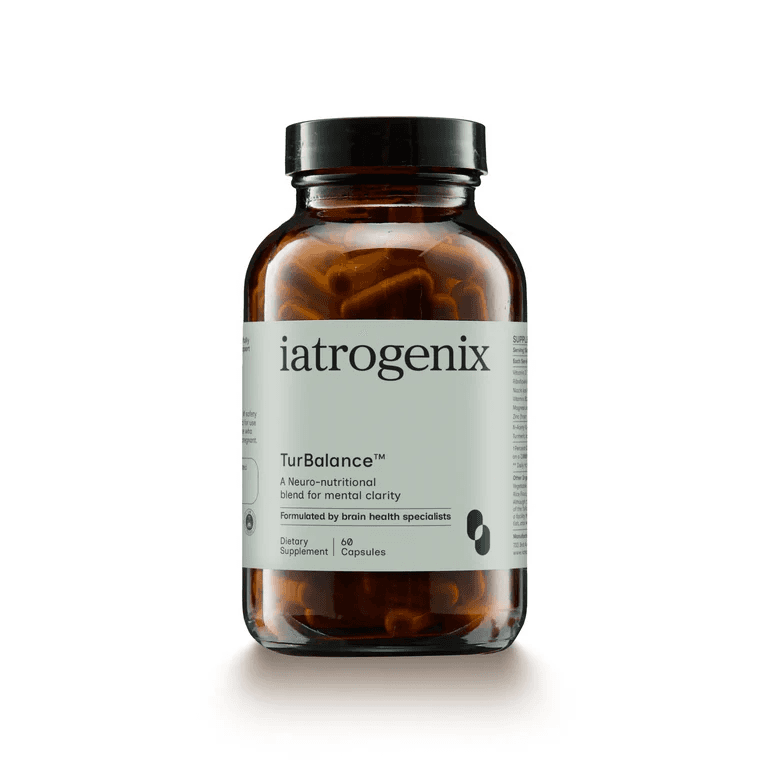
Tier 1: A well-designed multi-pathway formula. This covers multiple nutrients in bioavailable forms at meaningful levels, all in a reasonable number of capsules. You won't hit maximum research doses on every ingredient, but you'll cover several important pathways without overwhelming yourself. At Iatrogenix, we designed TurBalance with this philosophy: magnesium glycinate, B vitamins in methylated forms, vitamin D3, NAC, zinc, and curcumin in a 2-capsule daily dose. It's a practical baseline that addresses multiple mechanisms of brain fog simultaneously.
Tier 2: Individual supplements for your specific needs. Based on your particular situation, you might add standalone supplements at higher doses. If stress is your primary driver and you know you're magnesium-depleted, adding extra magnesium glycinate in the evening makes sense. If inflammation is a major factor and you don't eat fish, a dedicated omega-3 supplement is worth considering. If testing shows your vitamin D is significantly low, you might need more than what any combination formula provides.
This approach lets you cover your bases without excessive pill burden, while still targeting your specific weak points with higher doses where it matters most for you.
What You Can Skip
Not every popular brain supplement has good evidence. A few that get attention but don't live up to the hype:
Ginkgo biloba has been studied for decades with disappointing results. Evidence for cognitive improvement in healthy adults is weak. Some studies show modest benefits in people with significant cognitive impairment, but for typical brain fog, better options exist.
Prevagen (apoaequorin) is heavily marketed but has minimal credible evidence. The mechanism of action, a jellyfish protein improving brain function, is questionable from a biochemistry standpoint. The few studies were small and poorly designed.
Any supplement using proprietary blends to hide ingredient amounts is worth avoiding. This almost always means underdosing of active ingredients or poor-quality forms. If a company won't tell you exactly how much of each ingredient is included, that's information you need.
How to Evaluate Any Brain Fog Supplement
Use these criteria for any supplement you're considering:
Check for transparency. Are individual ingredient amounts clearly listed? Are the forms specified (magnesium glycinate vs. just "magnesium")? Companies that hide behind proprietary blends usually have something to hide.
Assess form and quality. Does it use bioavailable forms of nutrients? Is there third-party testing? Quality matters more than hitting the highest possible dose of a poorly absorbed ingredient.
Consider the tradeoff. A formula promising everything at maximum doses in two capsules is lying to you. Physics and chemistry have limits. Be realistic about what's achievable in a given format.
Think about your specific situation. What's your primary driver of brain fog? Stress? Inflammation? Hormonal changes? Nutritional gaps? The best approach targets your actual problem, not a generic list of brain-healthy nutrients.
Realistic Expectations
Supplements can correct nutritional gaps that impair brain function, support brain cell energy production and neurotransmitter function, reduce oxidative stress and inflammation, and provide raw materials your brain needs for optimal function.
Supplements cannot compensate for chronically poor sleep, overcome severe deficiencies overnight, replace medical treatment for underlying conditions, or work instantly. Most take two to six weeks for noticeable effects, and full benefits often take two to three months as nutrient stores rebuild.
Think of supplements as one tool in your toolbox. They're most effective when combined with proper sleep, stress management, good nutrition, and treatment of any underlying medical issues.
The Bottom Line
Brain fog supplements can work, but only if you choose quality ingredients in bioavailable forms and have realistic expectations about what any single product can deliver.
The practical approach: start with a well-designed formula that covers multiple pathways without excessive pill burden, then add targeted individual supplements based on your specific needs. Avoid products with proprietary blends, implausible claims, or too-good-to-be-true pricing.
The right supplement approach, combined with attention to sleep, stress, and nutrition, can make a real difference. You don't have to accept brain fog as your new normal.
About the Author
Nicholas Tzikas, MD, MPH, is a fellowship-trained headache specialist and academic physician whose clinical and research interests focus on complex headache disorders, post-traumatic headache, and the cognitive symptoms that often accompany them. He is a nationally recognized Key Opinion Leader who advises pharmaceutical companies on therapeutic development and clinical trials.
Learn more at iatrogenix.com
Medical Disclaimer
This article is for educational and informational purposes only and is not intended as medical advice. Always consult with your healthcare provider before starting any new supplement regimen, making changes to existing medications, or if you have questions about a medical condition.
If you are experiencing severe or sudden cognitive changes, neurological symptoms, or any medical emergency, seek immediate medical attention.
These statements have not been evaluated by the Food and Drug Administration. These products are not intended to diagnose, treat, cure, or prevent any disease.
"I've tried four different brain fog supplements. None of them worked. Am I just choosing the wrong ones, or is this whole category a waste of money?"
A patient asked me this last week, and I understood his frustration. He'd spent hundreds of dollars on products with impressive-sounding ingredients and confident marketing claims. The bottles were piling up in his medicine cabinet. His brain fog hadn't budged.
The answer to his question was: probably both. The supplement industry has real problems, and many products don't deliver what they promise. But there are supplements with solid evidence behind them. The challenge is knowing which ones actually work, understanding how dosing really works, and building an approach that fits your life.
The Problem with Most Brain Fog Supplements
Before talking about what works, it helps to understand why so many supplements fail.
The most common issue is poorly matched ingredient forms. Not all forms of a nutrient work the same way. Take magnesium: magnesium oxide absorbs quickly but less completely, while magnesium glycinate absorbs more slowly but more thoroughly and causes fewer digestive issues. Neither is universally "better." Oxide makes sense when you need faster onset, like acute migraine support. Glycinate makes sense for sustained daily support, like stress-related brain fog. The problem is when manufacturers choose forms purely based on cost without considering the intended purpose.
The second issue is formulations based on marketing rather than science. Products stuff in dozens of trendy ingredients at tiny amounts so they can list them on the label. This "kitchen sink" approach rarely works. Your body doesn't benefit from 47 ingredients at negligible doses.
Be skeptical of products that make dramatic claims, hide ingredient amounts behind "proprietary blends," or are suspiciously cheap. Quality ingredients in bioavailable forms cost money. If a product seems too affordable to be true, it probably is.
The Nutrients That Actually Matter for Brain Fog
These are the nutrients I discuss most often with patients experiencing brain fog. Each has research supporting its role in cognitive function.
Magnesium is involved in over 300 enzymatic reactions in your body, many of which directly affect brain function. It supports healthy neuronal signaling, helps regulate neurotransmitters, and plays a role in energy production within brain cells. Multiple studies show that magnesium deficiency correlates with cognitive impairment, and supplementation can improve memory, attention, and mental clarity. This is especially true for stress-related brain fog, since chronic stress depletes magnesium stores rapidly. Magnesium glycinate is the preferred form for cognitive support because it's well-absorbed and has a calming effect that can improve sleep quality.
B vitamins, especially B12, B2, and B3, are cofactors for energy production in brain cells. B12 supports nerve health and neurotransmitter function. B2 (riboflavin) supports mitochondrial energy production. B3 (niacin) supports healthy metabolic processes and cellular energy. B vitamin deficiencies are strongly linked to cognitive impairment, and supplementation has been shown to improve memory and reduce brain fog in people who are deficient or have higher needs. This includes vegetarians and vegans, people over 50, those with digestive issues, and anyone under chronic stress. Methylated forms are better absorbed and utilized.
Vitamin D3 functions more like a hormone than a vitamin. It supports healthy immune balance, neurotrophic signaling (brain cell growth and maintenance), neurotransmitter production, and overall brain function. Deficiency is extremely common, especially in northern climates, and strongly associated with cognitive impairment, depression, and fatigue. If you're going to test for only one thing, vitamin D is worthwhile because optimal levels (50-80 ng/mL) are significantly higher than the standard "normal" threshold.
N-Acetyl Cysteine (NAC) is a precursor to glutathione, your body's most important antioxidant. It helps clear oxidative stress in the brain, supports detoxification processes, and has anti-inflammatory properties. Studies show NAC reduces oxidative stress and supports cognitive function. It's especially useful for brain fog related to inflammation, toxin exposure, or post-viral syndromes.
Omega-3 fatty acids (EPA and DHA) are structural components of brain cell membranes and have anti-inflammatory effects. EPA supports mood and inflammatory balance, while DHA is important for brain structure and neurotransmitter function. The research on omega-3s and cognitive function is extensive. They're especially helpful for inflammation-related brain fog and for people who don't eat fatty fish regularly.
Curcumin, the active compound in turmeric, is one of the most studied natural anti-inflammatory compounds. Chronic low-grade inflammation increasingly appears to play a role in cognitive symptoms, and curcumin can cross the blood-brain barrier to address this directly.
Zinc supports immune function, neurotransmitter balance, and cognitive performance. Deficiency is common and often overlooked.
The Dosing Reality Nobody Talks About
Here's something the supplement industry doesn't like to discuss: hitting full research-level doses of all these nutrients means taking a lot of pills.
Studies on magnesium for cognitive function often use 300-400mg of elemental magnesium. Research on NAC typically uses 600-1200mg. Therapeutic omega-3 doses are 2000-3000mg of combined EPA and DHA. If you tried to get meaningful amounts of every evidence-based nutrient in a single product at these doses, you'd be swallowing a handful of horse pills twice a day.
A standard capsule holds about 500-750mg of total material. Two capsules give you roughly 1,000-1,500mg to work with. Trying to fit 400mg magnesium plus 600mg NAC plus B vitamins plus vitamin D plus zinc plus curcumin into that space is physically impossible.
This is why format matters. A powder formulation can deliver 5-10 grams per scoop, easily accommodating full therapeutic doses of multiple ingredients. The tradeoff is taste (NAC is sulfurous, curcumin is bitter, some B vitamins are unpleasant), convenience (requires mixing, harder to travel with), and the simple fact that many people prefer swallowing a capsule to drinking a supplement.
And some nutrients don't fit any multi-ingredient format well. Omega-3s are oils. They need to be taken as softgels or liquid, separate from any capsule or powder formula. This is true across the industry, not a limitation of any particular product.
So there's a real tension. On one hand, you want adequate doses. On the other hand, a regimen that tastes bad or requires 10-15 capsules daily isn't sustainable for most people. Compliance matters. The best supplement protocol is one you'll actually follow.
This is why I think about brain fog supplementation in two tiers.
A Practical Approach: Baseline Plus Targeted Support
Tier 1: A well-designed multi-pathway formula. This covers multiple nutrients in bioavailable forms at meaningful levels, all in a reasonable number of capsules. You won't hit maximum research doses on every ingredient, but you'll cover several important pathways without overwhelming yourself. At Iatrogenix, we designed TurBalance with this philosophy: magnesium glycinate, B vitamins in methylated forms, vitamin D3, NAC, zinc, and curcumin in a 2-capsule daily dose. It's a practical baseline that addresses multiple mechanisms of brain fog simultaneously.
Tier 2: Individual supplements for your specific needs. Based on your particular situation, you might add standalone supplements at higher doses. If stress is your primary driver and you know you're magnesium-depleted, adding extra magnesium glycinate in the evening makes sense. If inflammation is a major factor and you don't eat fish, a dedicated omega-3 supplement is worth considering. If testing shows your vitamin D is significantly low, you might need more than what any combination formula provides.
This approach lets you cover your bases without excessive pill burden, while still targeting your specific weak points with higher doses where it matters most for you.
What You Can Skip
Not every popular brain supplement has good evidence. A few that get attention but don't live up to the hype:
Ginkgo biloba has been studied for decades with disappointing results. Evidence for cognitive improvement in healthy adults is weak. Some studies show modest benefits in people with significant cognitive impairment, but for typical brain fog, better options exist.
Prevagen (apoaequorin) is heavily marketed but has minimal credible evidence. The mechanism of action, a jellyfish protein improving brain function, is questionable from a biochemistry standpoint. The few studies were small and poorly designed.
Any supplement using proprietary blends to hide ingredient amounts is worth avoiding. This almost always means underdosing of active ingredients or poor-quality forms. If a company won't tell you exactly how much of each ingredient is included, that's information you need.
How to Evaluate Any Brain Fog Supplement
Use these criteria for any supplement you're considering:
Check for transparency. Are individual ingredient amounts clearly listed? Are the forms specified (magnesium glycinate vs. just "magnesium")? Companies that hide behind proprietary blends usually have something to hide.
Assess form and quality. Does it use bioavailable forms of nutrients? Is there third-party testing? Quality matters more than hitting the highest possible dose of a poorly absorbed ingredient.
Consider the tradeoff. A formula promising everything at maximum doses in two capsules is lying to you. Physics and chemistry have limits. Be realistic about what's achievable in a given format.
Think about your specific situation. What's your primary driver of brain fog? Stress? Inflammation? Hormonal changes? Nutritional gaps? The best approach targets your actual problem, not a generic list of brain-healthy nutrients.
Realistic Expectations
Supplements can correct nutritional gaps that impair brain function, support brain cell energy production and neurotransmitter function, reduce oxidative stress and inflammation, and provide raw materials your brain needs for optimal function.
Supplements cannot compensate for chronically poor sleep, overcome severe deficiencies overnight, replace medical treatment for underlying conditions, or work instantly. Most take two to six weeks for noticeable effects, and full benefits often take two to three months as nutrient stores rebuild.
Think of supplements as one tool in your toolbox. They're most effective when combined with proper sleep, stress management, good nutrition, and treatment of any underlying medical issues.
The Bottom Line
Brain fog supplements can work, but only if you choose quality ingredients in bioavailable forms and have realistic expectations about what any single product can deliver.
The practical approach: start with a well-designed formula that covers multiple pathways without excessive pill burden, then add targeted individual supplements based on your specific needs. Avoid products with proprietary blends, implausible claims, or too-good-to-be-true pricing.
The right supplement approach, combined with attention to sleep, stress, and nutrition, can make a real difference. You don't have to accept brain fog as your new normal.
About the Author
Nicholas Tzikas, MD, MPH, is a fellowship-trained headache specialist and academic physician whose clinical and research interests focus on complex headache disorders, post-traumatic headache, and the cognitive symptoms that often accompany them. He is a nationally recognized Key Opinion Leader who advises pharmaceutical companies on therapeutic development and clinical trials.
Learn more at iatrogenix.com
Medical Disclaimer
This article is for educational and informational purposes only and is not intended as medical advice. Always consult with your healthcare provider before starting any new supplement regimen, making changes to existing medications, or if you have questions about a medical condition.
If you are experiencing severe or sudden cognitive changes, neurological symptoms, or any medical emergency, seek immediate medical attention.
These statements have not been evaluated by the Food and Drug Administration. These products are not intended to diagnose, treat, cure, or prevent any disease.
By Dr. Nicholas Tzikas, MD, MPH - Fellowship-trained headache specialist and co-founder of Iatrogenix
By Dr. Nicholas Tzikas, MD, MPH - Fellowship-trained headache specialist and co-founder of Iatrogenix
our journal
our journal
More insights for you.
More insights for you.
Explore more reflections, guidance, and practical tools to support your growth and well-being.
Explore more reflections, guidance, and practical tools to support your growth and well-being.

"I walked into a room and completely forgot why I was there. I'd open my laptop to do something important and just stare at it. Words I'd used my entire professional life suddenly wouldn't come to me. My doctor said it was just part of getting older, but I'm only 47."

A patient walked into my office last month with a story I hear often. She'd seen three doctors, undergone extensive testing, and heard the same refrain each time: Everything looks normal. Yet she couldn't focus at work, forgot simple tasks, and felt like she was thinking through fog.
Your questions.
Answered.
Not sure what to expect? These answers might help you feel more confident as you begin.
Didn’t find your answer? Send us a message — we’ll respond with care and clarity.
How is iatrogenix™ different from other brain health supplements?
What does “neuro-nutrition” mean?
Are iatrogenix™ products a replacement for prescription medication?
When will I start noticing results?
How do I know which product is right for me?
What is the 90-Day Protocol?
Can I take more than one iatrogenix™ formula at the same time?
Are iatrogenix™ products allergen-friendly?
Where are iatrogenix™ products made?
Where do you ship?
What is your return policy?
Why two forms of magnesium? (MigraMute)
Your questions.
Answered.
Not sure what to expect? These answers might help you feel more confident as you begin.
Didn’t find your answer? Send us a message — we’ll respond with care and clarity.
How is Iatrogenix different from other brain health supplements?
What does “neuro-nutrition” mean?
Are Iatrogenix products a replacement for prescription medication?
When will I start noticing results?
How do I know which product is right for me?
What is the 90-Day Protocol?
What’s the difference between MigraMute and TurBalance?
Can I take these products for general daily support?
Can I take more than one Iatrogenix formula at the same time?
Is Migramute allergen-friendly?
Where are Iatrogenix products made?
Where do you ship?
What is your return policy?
Your questions.
Answered.
Not sure what to expect? These answers might help you feel more confident as you begin.
Didn’t find your answer? Send us a message — we’ll respond with care and clarity.
How is iatrogenix™ different from other brain health supplements?
What does “neuro-nutrition” mean?
Are iatrogenix™ products a replacement for prescription medication?
When will I start noticing results?
How do I know which product is right for me?
What is the 90-Day Protocol?
Can I take more than one iatrogenix™ formula at the same time?
Are iatrogenix™ products allergen-friendly?
Where are iatrogenix™ products made?
Where do you ship?
What is your return policy?
Why two forms of magnesium? (MigraMute)